A trip to Sochi, on the Russian Riviera
Travel Photography Life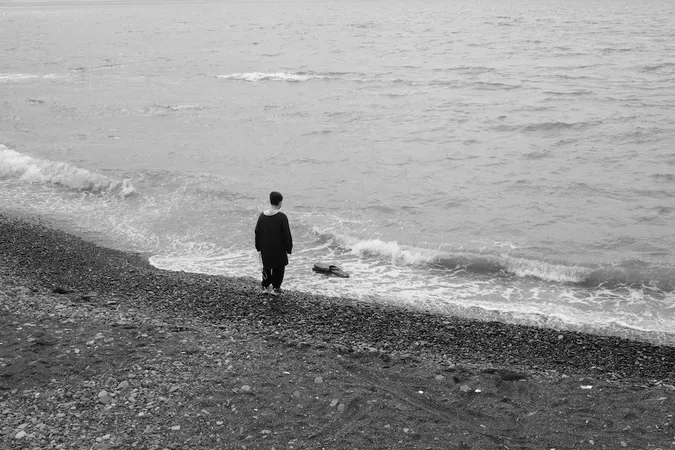
Discussing the country with the most consecutive time zones in the world, starting from Sochi—thus from the south—proves to be a decidedly interesting experience, because the Caucasus represents for this country an incalculably valuable political, strategic, and cultural asset. Indeed, this is where the highest ethnic diversity and the largest number of minorities in the Russian Federation are found—a region crowned by legendary mountain ranges and countless words of praise, from Lermontov to Tolstoy to Pushkin, who glimpsed in this area the honesty of a free and unspoiled way of life. As Pushkin writes in his famous poem *The Prisoner of the Caucasus*:
[...] It was the outlandish people of those parts that the European found most fascinating. The prisoner noted the religious beliefs of the mountain folk, their customs, and their upbringing; he liked the simplicity of their lives, their hospitality, their love of fighting, the speed and deftness of their movements, their lightness of foot, their strength of hand.*
A region thus destined to be transfigured and ennobled because of its natural beauty and its proud and countless peoples. The geographer Al-Mas’udi, one of the most eminent encyclopedists of the Arab world at its zenith (10th century), defined this area as *Jabal al-Alsun*, “the mountain of tongues.”
Sochi, in this regard, represents a high point: located precisely between the Black Sea and the ridges of the Greater Caucasus, it is the ideal place to enjoy a privileged view of the variety of the Caucasian landscape, acting as a bridge between modernity and the tradition of the Caucasian hinterland. Today, Sochi has become a particularly beloved vacation destination, well suited for catching one’s breath. Indeed, green—the color of quiet and rest according to Kandinsky—is predominant in this city, and not by chance. Stalin chose to build his dacha here and promoted the city by extensively intervening with the construction of parks, sanatoriums, and boulevards, effectively turning it into a unique resort center, the result of enormous investments totaling around one billion rubles. The goal was to enhance the location to offer the Russian people an escape from the stress of urban life. In the 1950s and 1960s, it became established as a privileged place of rest.
We have decided to set off, on a flight from Yerevan, around Easter time, to go and see firsthand the state of affairs in these parts and report back to you on the most noteworthy aspects, now that the war in Ukraine threatens to interfere with its celebrated tranquility.
The airport is 15 km from the Psou checkpoint leading to Abkhazia and a 40-minute drive from the center of Sochi, in the Adler district. A taxi takes us to the hotel; check-in is quick, and the place seems particularly busy. When I enter the room, however, I almost immediately notice that the internet connection has significant limitations. Some of them were obviously known to me (like the blocking of WhatsApp and Google Meet), but others catch me off guard. Since February 10, 2026, Russia has tightened its filters, hindering and slowing access to Telegram, which as of today, April 2026, is completely inaccessible. What I try to do is equip myself with an alternative tool, quickly developing a small chat that would allow me to stay in touch with my family. I manage to do so, but only up to a point, because the real-time communication protocol barely works. So I set up a polling-based communication tool (less responsive), because without a VPN immediately available, real-time communication is not a path I can choose to take. For the moment, it's enough.
The next morning we wake up early. I have breakfast alone because my travel companion is on a strict diet. I can't help but notice that the dining room is literally packed, so much so that I struggle to find an empty table just for myself. I stuff myself with chicken medallions and salad, go upstairs to prepare my customary Japanese tea, and meet my travel companion outside the hotel. The first thing we decide to do is trivial, very trivial: a leisurely walk along the Black Sea coast. The goal of this trip, in fact, is "to stroll," because that's what I enjoy most when visiting a country—walking aimlessly and without haste, letting things unfold on their own. Here too, I notice many people: athletes, idlers, smokers, even sunbathers. The numerous piers slowly crumbling into the water are photogenic, so I start looking for one to photograph.

Then the memory of war suddenly reappears out of the blue. We notice a radar system overlooking the Black Sea to ensure security, next to a small lighthouse built on a level higher than the promenade. We walk right underneath it.
The weather these spring days is unstable. When the sun comes out from behind the clouds, it makes trousers and boots unbearable. When it disappears, I wish I had a windbreaker with me. A few drops of rain frame it all. I think that if drones come, they will come from the sea, where the marine horizon abruptly turns black and gives the Black Sea its name.

Between 2025 and 2026, Sochi suffered several drone attacks, which caused casualties and damaged various facilities and private homes. The most severe of these occurred in July 2025, when a private house was deliberately attacked in the Adler district, killing two women and injuring eleven other civilians. The targets, however, still appear to be mainly oil depots, energy infrastructure, as well as ports and airports.
The walk stretches on; we proceed north and then south, then north again, returning eastward into the city center. We cover the urban core length and breadth, taking note of any museums we might enjoy visiting another day. We have lunch at Rostic’s, the fast-food chain that replaced KFC on the eve of the sanctions. Inside, everything is more or less the same, but the recipes and administrative software have been replaced by the new management. The same thing happened with Starbucks and McDonald’s, which became Stars Coffee and Vkusno i tochka, “Tasty and that’s it”, respectively. We also see many remnants of the 2014 Olympic Games, which brought the city international recognition. On that occasion, road infrastructure was permanently improved with the construction of 360 km of new roads, and new luxury hotels sprang up. With this event, Sochi transformed from a seasonal destination into a year-round active hub.
But there is one thing that reawakens the taste for idleness: our passion for good tea. By chance, we come across a tea room that soon becomes our center of gravity. We recharge; I drink some green Oolong, splendid, mystical. I forget everything. We will return several times throughout the trip.


The next day, we opt for museums. Russian art generally falls among my favorites. Icons, cinema, painting—they are all part of my personal preferences. I couldn't miss this opportunity. We also visit the Museum of the History of Sochi, admiring its flora, fauna, wind patterns, and historical events. Notable is the role this city played during the Second World War, when it shed its tourist skin and became a vital "hospital city."
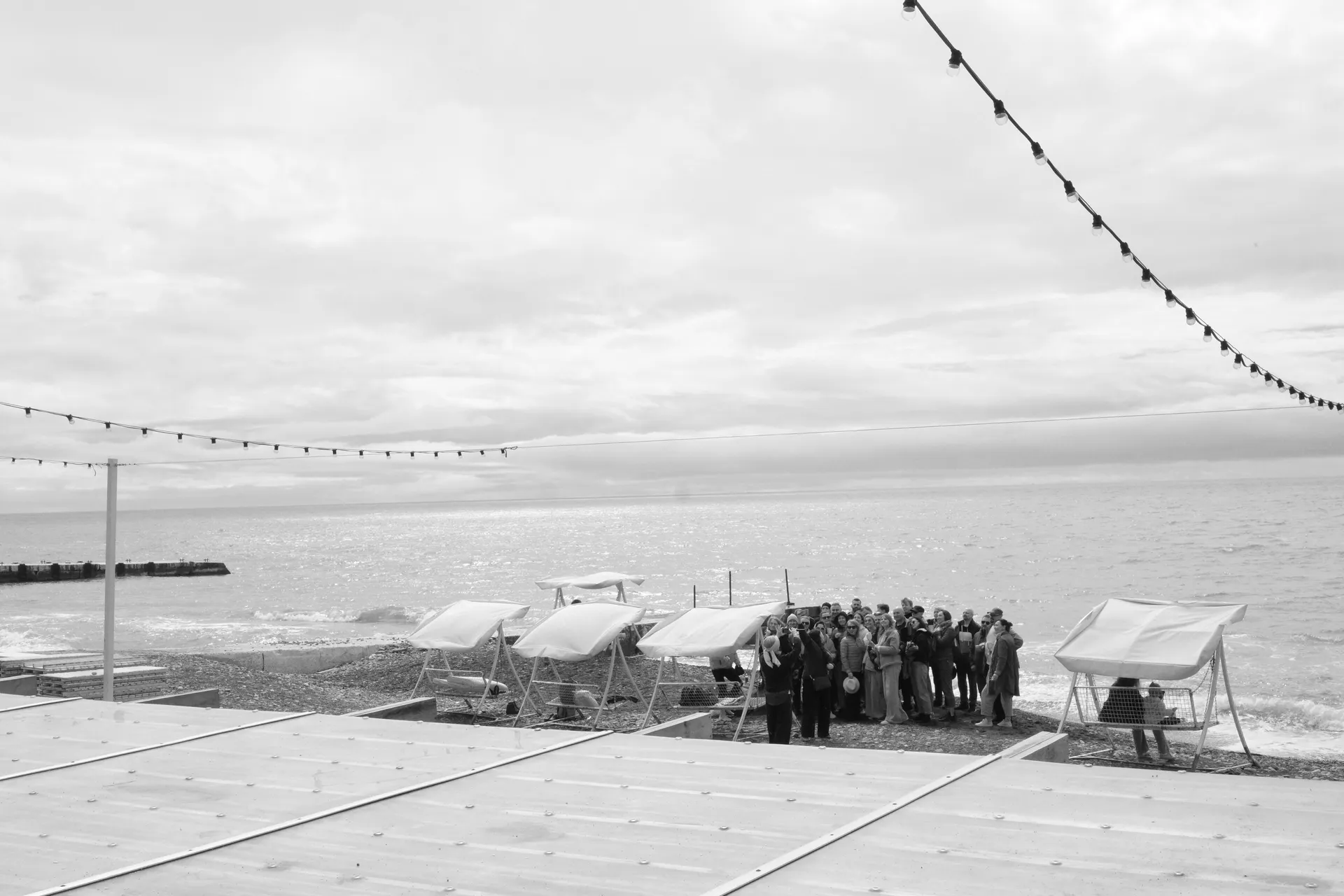
On the third day, we are supposed to leave. We spend the first part of the day visiting the Subtropical Botanical Garden, a vast 49-hectare park, the largest in the federation. Why do I say "supposed to"? Because just before buying our tickets to enter the garden, the air-raid sirens go off. For me, something changes, but no one around me seems to notice them, so much so that I wonder if I'm mistaken. From this point on, the day will take an unpredictable turn.
The same sirens start blaring again as we are on our way back, approaching the hotel to pick up our luggage. Along the promenade, the sound of the sirens mingles with the notes of a street musician who, nevertheless, does not stop performing. We head to the airport and wait for our flight, which is postponed hour by hour, until it is finally canceled. This surprise forces us to find a solution, as the forecasts did not bode well: undoubtedly, the airport would have difficulties the following day as well. Hence, the only option was to wait until the next morning and, in the meantime, identify the nearest airport safe from possible attacks from which we could depart the following day. The most interesting candidate turned out to be Mineralnye Vody Airport, located in the Caucasian hinterland, halfway between the Black Sea and the Caspian Sea, in the Stavropol Krai.
We decide to reach it by a grueling but safe 13-hour overnight journey in a marshrutka. As the hours pass, we become convinced that we predicted well, as many flights from Sochi continue to be canceled or delayed. We see the sun blooming from the arrival station in Mineralnye Vody; I admire it through a dusty windshield, which filters it and makes it less intolerable to the eyes. Mount Gora Zmeyka (Snake Head) stands vivid before our eyes. At 6 a.m., in complete silence, it seems to watch over us, motionless. We decide to rest.

Mount Gora Zmeyka (Snake Head) from the Mineralnye Vody bus station at 6 a.m
Spending 48 hours moving from one seat to another is not pleasant, but this is the brief summary of the penultimate days. Finally, a civilian Sukhoi jet, designed by Russian and Italian specialists, brings us back to Yerevan in one hour. The feeling upon landing is that of having emerged from an insulating, deaf dome, because the only contacts we had outside Russia were mostly textual and rarely vocal. We reflect on what we have seen: despite the unpredictability, the city of Sochi still felt vibrant and alive. I remember the notes of a piano drifting from the hotel among the skyscrapers and into the dining room. What remains of this? The immense resilience of so many people who look at the sea and expect nothing but the waves to come from it.
We return and immediately read again about Sochi and its habitat: the Caucasus. Because the desire to know it better is strong, and it decidedly confirms the already written words of so many well-known authors. Much has already been said about this area, but it cannot suffice to quell the will to draw closer and learn more in the future, as it, like everything, is poised to change.
This article was published by Dissipatio: https://www.dissipatio.it/passeggiando-per-sochi/
*Alexander Pushkin, A Prisoner in the Caucasus, trans. Roger Clarke (Wordsworth Editions, 2005), p. 137.